Series
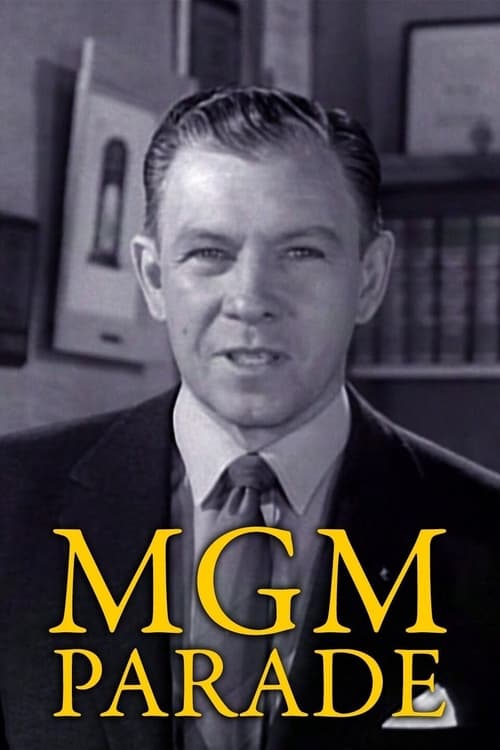
MGM Parade
The story
Episodes
34 episodes1955
 E130mEpisode 1Sep 14, 1955A promotional film hosted by George Murphy promoting the studio's past and its current release of "It's Always Fair Weather."
- E230mEpisode 2Sep 21, 1955In recapping the presentation of the "If I Only Had the Nerve/We're Off To See The Wizard" musical number, host George Murphy hopes that it will bring back fond memories for adults who have seen The Wizard of Oz (1939), and will encourage children who haven't seen the movie to see it. He is appropriately in the MGM trophy room to introduce the short The Story of Alfred Nobel (1939). He is visited by young Leo, who wants George to showcase his friends Screwball Squirrel and Meathhead as they duke it out in animated short Screwball Squirrel (1944). And he visits with Gene Kelly and Cyd Charisse on the set of It's Always Fair Weather (1955). Gene is featured in the "I Like Myself" roller skating musical number from the movie.
- E330mEpisode 3Sep 28, 1955After thanking the viewing audience for their positive reception to the show, host George Murphy introduces from the MGM vaults the classic movie A Free Soul (1931), showing a clip featuring the Academy Award winning performance by Lionel Barrymore. Next, he shows a short film, One Against the World (1939), which chronicles the career of Dr. Ephraim McDowall, who was the first person ever to perform internal surgery, which was before then considered sacrilegious and was therefore unheard of. Then he shows Guest Pests (1945), which demonstrates the different kinds of house guests that can be an annoyance. And in the coming attraction, he shows a few scenes from Trial (1955), based on the Harper Award winning novel of the same name by Don Mankiewicz, who adapted his novel for the big screen.
- E426mEpisode 4Oct 5, 1955Includes clips of "Trial" (1955) and the musical number "The French Lesson" from "Good News" (1947). Also shown is a tour of Lake Metro on the MGM back lot.
- E530mEpisode 5Oct 12, 1955Host George Murphy talks about masks as his introduction to the short film, The Face Behind the Mask (1938), which tells the true story of Louis XIV of France and the unknown man he imprisoned behind an iron mask. He then introduces one of the late Robert Benchley's classic comic "how to" shorts, How to Train a Dog (1936). Murphy next introduces the MGM hall of fame movie of the week, Till the Clouds Roll By (1946), which is about composer, Jerome Kern. In the film clip shown, Tony Martin sings "All the Things You Are" written by Kern. Murphy lastly receives a visit from actor John Hodiak, who talks about his latest movie, Trial (1955).
- E630mEpisode 6Oct 19, 1955Clips from "The Amazing Mr. Nordill", Greta Garbo in "Anna Christie", and an interview with Robert Taylor.
- E730mEpisode 7Oct 26, 1955Included are clips from the Carey Wilson Miniature Changed Identity (1941) and the Tex Avery Cartoon The Early Bird Dood It! (1942), as well as an interview with Debbie Reynolds.
- E830mEpisode 8Nov 2, 1955Features film clips from The Philadelphia Story (1940) and Ziegfeld Follies (1946).
- E930mEpisode 9Nov 9, 1955Marlon Brando drops and talks about his role with scenes from his most recent movie, "Guys and Dolls".
- E1030mEpisode 10Nov 16, 1955Host George Murphy introduces clips from "A Guy Named Joe" (1943), the Carey Wilson Miniature "A Door Will Open" (1940), and the Pete Smith Specialty "You Can't Win" (1948).
- E1130mEpisode 11Nov 23, 1955Features clips from the John Nesbitt's Passing Parade short "Strange Testament" (1941), the Pete Smith Specialty "Let's Talk Turkey" (1941), and an interview with Susan Hayward.
- E1230mEpisode 12Nov 30, 1955Host George Murphy introduces clips from "Thirty Seconds Over Tokyo" (1944), "Home Movies" (1940), and "Master Will Shakespeare" (1936), as well as a preview of the then-upcoming "Kismet" (1955).
- E1330mEpisode 13Dec 7, 1955Host George Murphy introduces clips featuring Fernand Gravey in The Great Waltz (1938), Susan Hayward in I'll Cry Tomorrow (1955), and the MGM Historical Mystery The Miracle of Salt Lake (1938).
- E1430mEpisode 14Dec 14, 1955Host George Murphy introduces segments from two MGM productions, the feature length movie Mutiny on the Bounty (1935) and the short film The Greatest Gift (1942). He then presents a few common pet peeves, dramatized by an unfortunate man, who must wait to use the only pay telephone booth around which is occupied by a very talkative woman; as a shopkeeper, who is waiting on a customer who doesn't seem to want to spend any money but causes calamity in the store; who slips on a loose rug at the top of a flight of stairs; who battles a stuck ice cube tray in a freezer; and who needs to find the burnt out bulb on a string of Christmas tree lights. Murphy then meets with actor/singer Howard Keel, who is to appear in the upcoming MGM musical Kismet (1955).
- E1530mEpisode 15Dec 21, 1955Host George Murphy introduces clips from Meet Me in St. Louis (1944) (as Judy Garland sings "Have Yourself a Merry Little Christmas), A Christmas Carol (1938), and Kismet (1955) ("Stranger in Paradise").
- E1630mEpisode 16Dec 28, 1955Host George Murphy introduces the musical number "Czaritza" from the movie, Maytime (1937), sung by one of the most enduring set of screen sweethearts, Jeanette MacDonald and Nelson Eddy. He then introduces the short film That Inferior Feeling (1940), where everyman Joe Doakes provides examples of how men can feel inferior and, thus, make themselves look more inferior than they are. Next, Murphy introduces a short movie about a non-inferior man, Matthew Fontaine Maury, who is credited with creating the first maritime wind and currents charts. That movie is Prophet Without Honor (1939). And finally, Murphy presents a few scenes from I'll Cry Tomorrow (1955), where real-life singer Lillian Roth, portrayed by Susan Hayward, admits her alcoholism.
- E1730mEpisode 17Jan 4, 1956Host George Murphy, who has been told that most Latin dances are flirtation set to music, presents one of the most flirtatious ever put on screen, from The Kissing Bandit (1948), featuring Ricardo Montalban, Cyd Charisse and Ann Miller. He then presents two shorts: The Forgotten Step (1938) in which a man recently hit hard by the stock market crash, tries to regain his fortune through committing what he considers the perfect crime; and The Story of 'The Jonker Diamond' (1936) which tells the story of the the discovery and post-discovery journey of one of the most famous jewels in the world. And finally, he introduces a scene from the new movie Diane (1956), where Marisa Pavan plays Henry VIII's current wife, Catherine de Medici, and Lana Turner plays Diane de Poitiers, the Countess de Breze, the woman that Catherine suspects Henry truly loves.
- E1830mEpisode 18Jan 11, 1956Host George Murphy, in the hall of fame segment, introduces a scene with two of the screen's greatest stars, Greta Garbo and John Barrymore, from Grand Hotel (1932), that scene which contains one of Garbo's most famous on-screen quotes. He then presents the short film The Man on the Rock (1938) which questions what are the historically recorded facts surrounding Napoleon Bonaparte's death. Next, one can witness what it would be like to have lion cubs as pets in Lions on the Loose (1941). And Murph makes a visit to the set of Diane (1956) to speak with one of the movie's stars, Roger Moore who portrays King Henri II of France and who presents a scene from the movie.
- E1930mEpisode 19Jan 18, 1956Host George Murphy first introduces the song and dance number "The Babbit and the Bromide" performed by Fred Astaire and Gene Kelly in Ziegfeld Follies (1945), that number which satirizes clichéd social niceties. Next, several serial cartoonists are shown at work in the short film People on Paper (1945). Murph then introduces another short film, Ghost Treasure (1941), which details the treacherous search for gold in the inhospitable Death Valley. And in the coming attractions segment, he introduces Ransom! (1956), the clip shown which highlights the pros and cons of paying ransom in a kidnapping situation.
- E2030mEpisode 20Jan 25, 1956In the family album segment, host George Murphy introduces the water ballet performed by Esther Williams in Ziegfeld Follies (1945). Next, he introduces the short film Our Old Car (1946), which presents the various automobiles owned by one family over the years and generations. The transportation/travel theme is continued with the next short film, What Do You Think?: Tupapaoo (1938), which describes the first encounter between a South Pacific island's inhabitants and the first non-native to land on the island. Finally, Murphy pays a visit to actress Donna Reed, who talks about her intense role in the soon to be released film, Ransom! (1956), from which a scene is shown.
- E2130mEpisode 21Series finaleFeb 1, 1956In the MGM trophy room, host George Murphy is proud to display the latest award for the studio, specifically Redbook Magazine's annual movie award to Dore Schary. In the hall of fame segment, Murph introduces a scene from The Champ (1931), where the character portrayed by Wallace Berry, who won a Best Actor Oscar for this performance, announces from his prison cell his long term future plans for his adoring son, Dink. Next, he introduces the short film The Lady or the Tiger? (1942), which posits whether a cold hearted woman would rather send her lover to death or into the arms of another woman. He then introduces the "Number Please" skit from the movie revue, Ziegfeld Follies (1945), where an exasperated man is having problems getting through to his friend Louis on the telephone though of no fault of his own. Finally, he chats with Russ Tamblyn about his latest movie, The Last Hunt (1956).
- E2225mEpisode 22Feb 8, 1956Host George Murphy introduces the theme for this episode, which is love in all its forms. Romantic love is displayed between the characters portrayed by Nelson Eddy and Jeanette MacDonald in a scene of them singing "Sweetheart" from Maytime (1937). Patriotic love for Abraham Lincoln is displayed in Charles 'Chic' Sale's portrayal of the president in excerpts from The Perfect Tribute (1935) which deals with a more private incident between the president and a wounded soldier, who doesn't know to whom he is speaking, following the delivery of the Gettysburg address. A more literal use of the word love is presented as Lena Horne sings the song "Love" in a scene from Ziegfeld Follies (1945), the song which describes love in its many facets. And love in wedded bliss is displayed in real life and on the silver screen as husband and wife guests Desi Arnaz and Lucille Ball present a scene from their upcoming feature, Forever, Darling (1956).
- E2330mEpisode 23Feb 15, 1956Host George Murphy, in the MGM family album segment, introduces a number from Anchors Aweigh (1945) featuring Gene Kelly performing with Jerry the Mouse as the King of Cartoonland. This was the first number on the big screen where a live human and an animated character sang and danced together. Another King, or more precisely one that never was, is presented in The King Without a Crown (1937), which provides an account of a Christian missionary name Eleazar Williams living in Green Bay, Wisconsin, who actually could have been King Louis XVII of France. Murphy then introduces producer Dore Schary and writer/director Richard Brooks, who, collaborating on The Last Hunt (1956), documented the filming of the final buffalo stampede scene.
- E2430mEpisode 24Feb 22, 1956Host George Murphy introduces long clips from Strike Up the Band (1940) featuring Mickey Rooney and Judy Garland in "Our Love Affair" number, the farewell scene with John Gilbert and Renée Adorée from The Big Parade (1925), and documentary footage on Thomas A. Edison in his Menlo Park laboratory from the documentary Servant of Mankind (1940). He also shows shorter clips of Allan Jones and Jeanette MacDonald in "The Donkey Song" number from The Firefly (1937) and a comedic exchange between Jean Harlow and Wallace Beery from Dinner at Eight (1933). A promotional dramatic clip from The Last Hunt (1956) with Robert Taylor and Stewart Granger is also previewed.
Cast




Stills & videos
If you liked this
 100 Years of Warner Bros.2023
 Marvel Studios Assembled2021
 Studio 60 on the Sunset Strip2006
 20/201978
 LIGHT & MAGIC2022
 Disney Gallery / Star Wars: The Mandalorian2020
 The Movies That Made Us2019
 Wise Guy: David Chase and The Sopranos2024
 The Story of Film: An Odyssey2011
 The Studio2025
 The New York Times Presents2020
 Marvel Studios Legends2021
 The Franchise2024
 The Eric Andre Show2012
 The Muppets2015
 Rob Dyrdek's Fantasy Factory2009
 Through the Wormhole2010
 Shark Tank2009
 60 Minutes Australia1979
 Mr. Scorsese2025